
Acne Treatment in Dwarka: What Works on Indian Skin (And What Doesn't)
Honest acne treatment guide for Dwarka. What actually clears Indian skin, what causes more pigmentation, and the real timeline from a Sector 8 clinic.
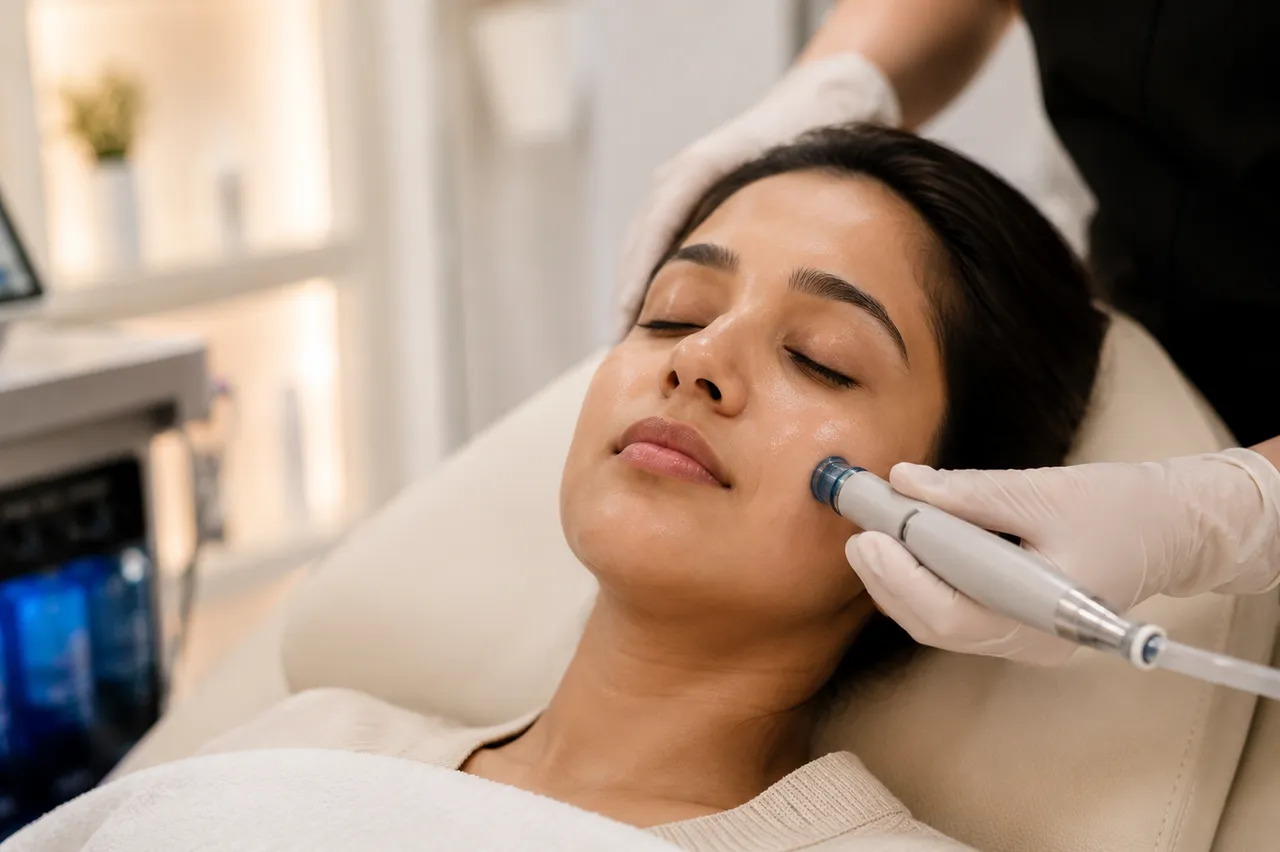
If you’ve been dealing with acne in Delhi, you probably already know it’s stubborn here. The pollution, the heat, the masks, the late nights, the iced coffees. There’s a reason adult-onset acne is now the most common complaint we hear at the clinic.
What people don’t realise is that Indian skin needs a slightly different acne approach than what you read on most Western skincare blogs. Here’s a straight conversation from inside a Dwarka derma clinic.
Why acne on Indian skin behaves differently
Two things you should know before any treatment plan:
One: Indian skin pigments easily. When acne heals, it often leaves behind brown or grey marks (post-inflammatory hyperpigmentation, or PIH). For most of our clients, the marks bother them more than the acne ever did.
Two: aggressive Western protocols can backfire. High-strength benzoyl peroxide, daily retinols, drying spot treatments — they were designed for fairer, drier skin types. On Indian skin, they often cause more irritation, more PIH, and a longer recovery.
Treating Indian acne well means controlling the breakout AND protecting against the mark it leaves behind. Both, in parallel.
What we actually do at the clinic
A real acne consultation isn’t “here’s a face wash.” It starts with figuring out what type of acne you have, because the treatment changes completely depending on the answer.
Hormonal acne (jawline, chin, recurring at the same time each month)
Common in women in their late 20s and 30s. Often linked to PCOS, stress, or diet. Topical treatment alone won’t fix this. We work with you on a longer plan that may include medical supervision. Usually three months in, things start to change properly.
Inflammatory acne (red, painful, deeper)
This responds well to in-clinic treatments combined with the right home routine. A medicated facial, low-strength chemical peel, and proper actives at home will move the needle in 6–8 weeks.
Comedonal acne (blackheads, whiteheads, congestion)
The kind where your skin just looks “rough” all the time. HydraFacial is genuinely useful here — it deep-cleanses pores in a way no face wash can. Combined with a salicylic-based home routine, this clears in a month or two.
Cystic / nodular acne (large, painful, deep)
This needs medical attention, not a facial. We refer or co-manage with a dermatologist, because cysts that aren’t treated properly leave scars.
Treatments that work for Indian acne
Chemical peels (the right strength) — Mandelic acid or salicylic peels at clinic-controlled strength. Gentle, brightens marks at the same time. From around ₹2,500 a session.
HydraFacial with acne protocol — A specific HydraFacial setting that adds salicylic acid to the deep-cleanse stage. Excellent for comedonal and inflammatory acne. From ₹4,500.
Q-Switch laser for post-acne marks — Once the active acne is controlled, Q-Switch is the most reliable way to clear stubborn PIH on Indian skin. See Q-Switch details.
A proper home routine — included in every consultation. We share a written plan with brand names and instructions, in plain English. Not a sales pitch for our own products.
Treatments to be careful about
Some popular options come with real Indian-skin risks:
- Strong retinols started too fast. Build up slowly. Starting at 0.05% three nights a week is fine. Starting at 0.1% nightly is asking for irritation and PIH.
- Microneedling on active acne. Spreads bacteria. Only after the inflammation is controlled.
- DIY at-home dermarollers. Please don’t. We see infection cases monthly.
- Glycolic peels above 30% without supervision. Beautiful on paper. Pigment disasters in practice.
- Whitening / fairness creams marketed as “acne removers”. Often contain steroids. Long-term damage is real.
A realistic acne timeline
Two things take longer than people expect: clearing the active breakout, and clearing the marks left behind.
Active acne: 6–10 weeks to see real reduction. We assess every 3–4 weeks and adjust.
Post-acne marks: 3–6 months. Q-Switch sessions every 3–4 weeks, plus serums at home.
Acne scars (depressed scars): A different conversation. These need microneedling, subcision, or laser resurfacing, and the timeline is 6 months plus. We’ll be honest at consultation about what’s realistic.
What it costs in Dwarka
Indicative ranges based on a typical journey:
| Stage | Sessions | Indicative cost |
|---|---|---|
| First consultation + assessment | 1 | from ₹1,000 |
| Mild–moderate acne plan (2 months) | 3 peels + 1 HydraFacial | ₹12,000–16,000 |
| Post-acne mark removal (3 months) | 3 Q-Switch sessions | ₹12,000–14,000 |
Exact pricing depends on your assessment. See the price list for full details.
Daily habits that matter more than any product
- A gentle, fragrance-free cleanser, morning and night. Not a “deep-cleansing” foam.
- Sunscreen every single morning. Even indoors. Even monsoon. This is the difference between fading marks and permanent ones.
- Don’t pick. We know. We say it anyway. Picking is the single biggest reason marks stay.
- Wash pillowcases twice a week.
- Clean your phone screen daily.
Book a real assessment in Dwarka
We’re at Sector 8, Dwarka, open 7 days a week from 10 AM to 8 PM. WhatsApp +91 74007 60054 to send a photo and get an honest first opinion before booking.
If you’ve been trying things on your own for months and the breakouts keep coming back, that’s the sign to talk to someone. Book a consultation or call us. Most clients see real change within the first month of a proper plan.
This article is general information from the Brightonic team and is not a substitute for personal medical advice. Suitability and outcomes are assessed individually at consultation.
Considering a treatment?
Book a calm, no-pressure consultation at our Sector 8, Dwarka centre.
Book a Consultation →