
Dark Circles: The 4 Types, and What Actually Treats Each
Dark circles treatment in Dwarka — the four types, a two-minute mirror test to tell them apart, and what genuinely helps each one.

Four different problems share one name. That’s why the cream your cousin swore by did nothing for you.
Dark circles aren’t one condition. They’re four, and each responds to something completely different:
- Pigmented — actual brown or grey colour in the skin. Common in Indian families, made worse by rubbing, sun and old inflammation.
- Vascular — blue, purple or dusky red, from blood vessels showing through very thin lower-lid skin. Worse on bad-sleep weeks.
- Structural — not colour at all. A shadow thrown by a groove under the eye, the tear trough. No cream fixes a shadow.
- Mixed — the one we see most, usually pigment sitting on top of a hollow.
Match the treatment to the type and you get somewhere. Miss it and you spend a year on the wrong thing. Here’s how to tell them apart at your own mirror, in two minutes.
Two tests, one mirror
The stretch test. Clean skin, no makeup, decent daylight. Put a fingertip just below the lash line and stretch the skin gently sideways — barely, no dragging. If the darkness stays exactly as it was, that’s pigment. If it lightens or almost disappears as the skin goes taut, that’s vascular.
The light test. Face a window head-on, then tilt your chin up, then down. Pigment looks the same from every angle, because it’s colour. A hollow’s darkness moves — deepest with light from above, nearly gone with light straight on. That’s why you look fine in a bathroom selfie and wrecked under office tube lights at 4 PM.
Do both. If the darkness partly fades on the stretch and shifts with the light, you’re mixed — and that needs a sequenced plan, not one treatment.
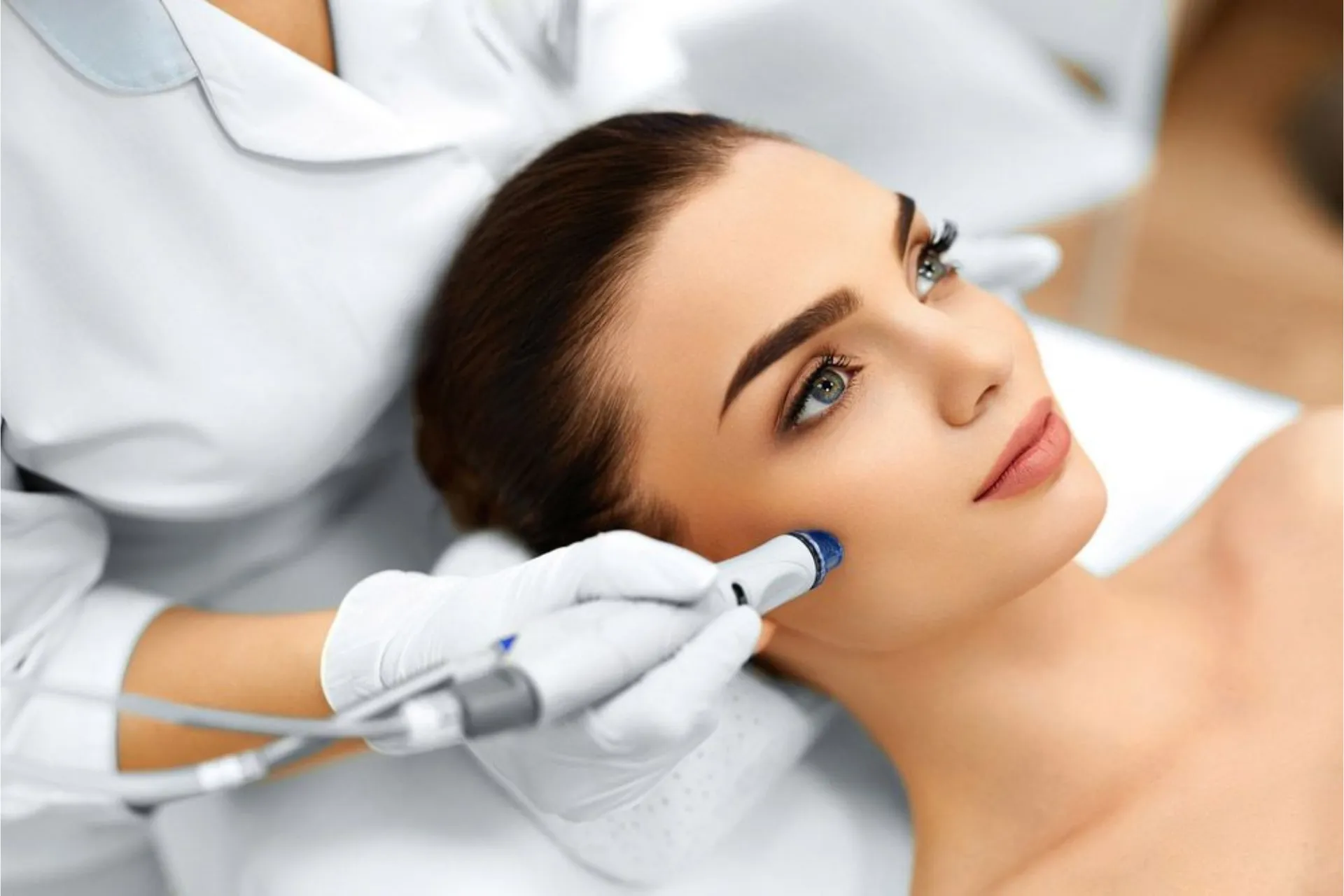
Clinic light is even and standardised. At home, stand near a window, skip the concealer, and check from more than one angle.
The four types, and what genuinely moves each
| Type | How it behaves in the two tests | What actually helps | Realistic outcome |
|---|---|---|---|
| Pigmented — brown or grey | Stays dark when stretched; identical from every angle | Pigment-targeted laser sessions, daily broad-spectrum sunscreen, and stopping the rubbing | Fades noticeably across 3–6 months |
| Vascular — blue or purple | Fades when stretched; worse after poor sleep, salt or allergy flares | Sleep and salt control, treating the allergy, care that supports thin lid skin | Softens, but keeps fluctuating week to week |
| Structural — a hollow | Skin colour looks normal; the shadow shifts as light angle changes | Assessed in person — creams and pigment lasers do nothing here, and sometimes nothing on our menu will | Depends entirely on the assessment |
| Mixed | Partly fades on the stretch and shifts with light | Treat the pigment first, reassess the shadow after | Stepwise, and slower than people expect |
Notice which row has no cream in it. Two of the four, in fact.
Why so much money goes into the wrong tube
A ₹1,200 tube, nightly for three months, zero change. We hear this every week.
Here’s the reason. A brightening cream acts on pigment near the surface — that’s its entire mechanism. If your circles are structural, you’re trying to bleach a shadow, and geometry doesn’t respond to a cream. If they’re vascular, you’re reaching for vessels under skin about as thin as this page.
There’s a second problem nobody mentions. Applying anything under the eye means touching, tugging, rubbing — and friction is one of the real drivers of under-eye pigment. Some people are darkening the area while treating it.
The kitchen list has the same trap. Cucumber slices and a cold spoon genuinely calm puffiness and a vascular tinge for an hour or two, which is why people believe in them. Neither touches pigment, and neither fills a groove.
The Delhi factor nobody connects
Dust, construction and an AQI that climbs from October onward means itchy eyes for a big chunk of the year. Itchy eyes mean rubbing. Rubbing means friction pigment.
We see it constantly in clients from Sector 12, Palam and Uttam Nagar — circles that worsened over two winters with no change in sleep or diet, because the eye allergy was never treated and the rubbing never stopped. Treating pigment while the rubbing continues is a slow way to break even.
If your eyes itch most mornings, fix that before booking any session.
What we actually do at the clinic
The read comes first. Same two tests under standard clinic lighting, plus questions about sleep, screen hours, allergies and family history. If the pattern points to something medical — anaemia, thyroid, chronic allergy — we’ll say so and suggest you get it checked rather than sell you sessions.
For the pigmented type. Pigment-targeted laser is the mainstay, from ₹4,000 a session, spaced three to four weeks apart, typically four to six sessions before you judge it. Done on internationally certified devices by trained professionals under clinical protocols, with settings chosen for Indian skin tones. Q-Switch details.
For skin quality around the area. A HydraFacial from ₹4,500 improves overall skin and hydration — and it is not a dark-circle treatment. It works around the orbital rim, not on the lid.
For the structural type. Assessed in person — and sometimes the honest answer is that nothing on our menu will fix it. We’d rather say that than sell you a course.

Eye shields on, settings chosen for Indian skin tones — and only after the read says the darkness is actually pigment.
What sleep and water really do
They help. Just not the way the internet implies.
Eight hours and less salt visibly lift a vascular circle within days, because you’re changing fluid and vessel dilation. That’s real, and it’s free. But the same week does nothing measurable to pigment, and nothing at all to a hollow — a groove doesn’t fill because you went to bed at 10.
So if your circles improve dramatically after a holiday, you’re mostly vascular. If they look identical rested or exhausted, you’re pigmented or structural, and lifestyle advice alone will keep failing you.
Where this doesn’t work, honestly
- Lifelong circles that both parents have. Genetic pigment improves with sessions. It doesn’t vanish.
- Untreated eye allergy or eczema on the lids. Settle that first, or you’re paying to undo your own rubbing.
- Deep hollows with very thin skin. Expectations need setting before anything starts, not after.
- Wanting it done before a function next week. Pigment work needs months, not days.
- Pregnancy or breastfeeding. We postpone elective sessions and reassess later.
Results genuinely vary from person to person, and progress here is gradual and assessment-led — anyone quoting you a session count before looking at your skin is guessing.
Key takeaway: Stretch the skin and change the light before you buy anything. Darkness that stays when stretched is pigment, and that fades over 3–6 months with pigment-targeted sessions from ₹4,000. Darkness that fades when stretched is vascular, and it answers to sleep, salt and allergy control. Darkness that moves with the light is a hollow — a shadow, not a stain, and no cream will ever reach it.
Get an honest read in Dwarka
Come in with clean skin and no concealer, and you’ll leave knowing which of the four you’re dealing with — including the cases where treatment isn’t the fix.
Brightonic is in Sector 8, Dwarka, near the Sector 9 Metro, an easy run from Sector 12, Palam and Janakpuri. WhatsApp +91 74007 60054 with a daylight photo taken without makeup and we’ll tell you which type it looks like before you spend anything. Book a consultation. Open 7 days, 10 AM–8 PM.
Quick answers
- How do I know which type of dark circles I have?
- Gently stretch the skin under your eye sideways. If the darkness stays, it is pigment. If it fades as the skin goes taut, it is vascular — blood vessels showing through thin lid skin. Then tilt your face under a lamp. If the darkness moves or deepens from certain angles, you are looking at a hollow, not colour.
- Can dark circles be treated permanently?
- No honest clinic promises permanent removal. Pigmented circles fade substantially over three to six months of pigment-targeted sessions and hold if daily sun protection holds. Vascular circles improve but still swing with sleep, salt and allergy season. Hollows are a volume shadow, so they slowly return as the face ages. Expect lasting improvement with maintenance, not a one-time fix.
- Do under-eye creams work for dark circles?
- Only for one of the four types. A brightening cream can genuinely lighten pigment sitting in the skin over a few months. It cannot reach blood vessels under the surface, and it cannot fill a hollow, because a shadow is not a stain. Most disappointment with eye creams comes from using them on the wrong type.
This article is general information from the Brightonic team and is not a substitute for personal medical advice. Suitability and outcomes are assessed individually at consultation.
Considering a treatment?
Book a calm, no-pressure consultation at our Sector 8, Dwarka centre.
Related treatment: Skin treatments in Dwarka