
Does PRP Actually Work for Hair Loss? An Honest Look at the Evidence
Does PRP work for hair loss? Honest answers from a Dwarka clinic — who responds, who shouldn't spend the money, real timelines and PRP vs GFC costs.
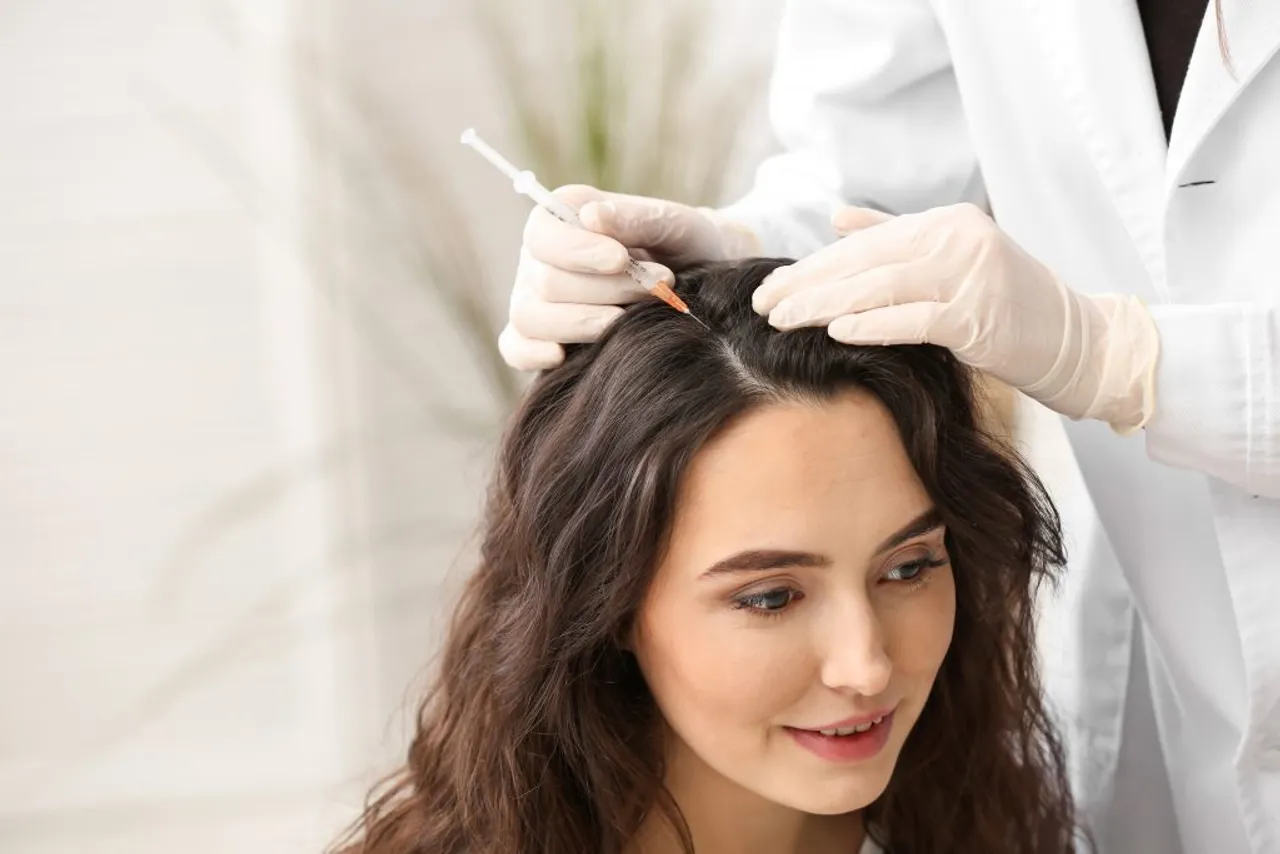
The short version, upfront: PRP works — for the right scalp. If you have early-to-moderate pattern thinning and your follicles are still alive and producing (thin, wispy) hair, the published evidence and what we see weekly at the clinic agree: expect real, measurable improvement.
If the area has been shiny-bald for years, PRP will not resurrect it. No injection can. Any clinic promising regrowth on a smooth, hairless patch is selling hope, not medicine.
That distinction is the whole game — so here’s what the studies show, who responds, who’s wasting their money, and why results vary so much between clinics.
What the evidence actually shows
PRP (platelet-rich plasma) is your own blood, spun in a centrifuge to concentrate the platelets, then injected into the thinning scalp. Platelets release growth factors that push miniaturised follicles back toward producing thicker, longer hairs.
The research picture, honestly stated: multiple randomised trials and pooled analyses report higher hair counts and shaft thickness versus placebo, with gains commonly in the region of 25–30 extra hairs per cm² after a full course. That’s real. It’s also modest — nobody goes from visible scalp to a dense mop.
And yes, some studies found little effect. Dig into those and you usually find low platelet concentrations, too few sessions, or the wrong candidates. Which brings us to the part most clinics skip.
Who responds — and who shouldn’t spend the money
We turn people away for PRP. Here’s the logic we use.
PRP is worth your money if:
- You have a widening part line, a thinning crown, or scalp that shows under bright light — but hair is still there, just finer than it used to be.
- Your hair loss started in the last few years, not the last few decades.
- You’re shedding after an illness, fever or postpartum phase and want to speed recovery.
Save your money if:
- The patch is completely smooth and has been for years. No follicle, nothing to stimulate. That’s a transplant conversation, not a PRP one.
- You have scarring alopecia — injections into scarred tissue don’t reopen closed follicles.
- The real cause hasn’t been treated. Low iron, thyroid issues and crash dieting all shed hair, and we see the crash-diet version monthly. Sorting nutrition — sometimes through a structured weight-management plan — will do more than any injection until the deficiency is fixed.

A scalp assessment first. If you’re not a candidate, being told so costs you nothing — a failed course costs ₹50,000.
The realistic timeline
Clients ask us for week-by-week honesty, so here it is:
- Weeks 4–6: shedding slows. This is the first real change and it’s easy to miss — you notice fewer hairs on the pillow before you notice anything in the mirror.
- Months 3–4: density and thickness become visible in comparison photos. The parting looks narrower. Existing hairs feel coarser.
- Month 6: the peak of the initial course.
Nothing meaningful happens in week one. Anyone showing you a “10-day PRP transformation” is showing you lighting and a haircut.
PRP vs GFC: the practical comparison
GFC (growth factor concentrate) is the newer cousin — instead of injecting concentrated platelets, a dedicated kit extracts and concentrates the growth factors themselves.
| PRP | GFC | |
|---|---|---|
| What’s injected | Your platelets, concentrated in plasma | Isolated growth factors, no cell debris |
| Preparation | Centrifuge spin of your blood | Specialised extraction kit, ~40 min |
| Typical course | 5 sessions, ~1 month apart | 5 sessions, ~1 month apart |
| Post-session feel | Mild scalp soreness for a day | Usually lighter reaction |
| Price at Brightonic | From ₹10,000 per session | From ₹15,000 per session |
Both work on the same principle. GFC delivers a more standardised dose per ml — why some clients choose it despite the price — while PRP remains the better-studied option. In our chairs, candidacy matters far more than which one you pick.
Coverage matters — the injections have to reach follicle depth across the whole thinning zone, not just a few token points.
Why the same treatment fails at one clinic and works at another
This is the question behind most “PRP is a scam” posts online, and the answer is boringly technical:
- Kit quality. A proper kit concentrates platelets to several times your baseline. Cheap kits barely exceed whole blood — you’re paying for plasma with a rounding error of platelets.
- Spin protocol. Centrifuge speed, time, and single versus double spin decide the platelet yield. Done casually, the “PRP” isn’t rich in anything.
- Injection technique. The follicle bulb sits millimetres deep. Too shallow and the growth factors never reach it; too sparse and half the thinning zone gets nothing.
A ₹2,999 PRP session has cut a corner on at least one of these. Usually all three.
The maintenance reality
One more honest bit. PRP doesn’t switch off the hormonal driver of pattern hair loss — it strengthens follicles while that pressure continues. After the initial course, plan on a maintenance session every 4–6 months. Skip maintenance entirely and the gains fade over 9–12 months.
PRP also performs better as part of a plan than as a solo act — which is exactly how we structure our hair treatment programme.
Key takeaway: PRP delivers real, evidence-backed improvement for early-to-moderate thinning with live follicles — shedding slows by weeks 4–6, density shows by months 3–4. It cannot revive long-bald areas, results depend heavily on kit, spin protocol and technique, and maintenance every 4–6 months is part of the deal.
Getting an honest opinion in Dwarka
Brightonic is in Sector 8, Dwarka — an easy trip from Palam, Janakpuri and Uttam Nagar, open 7 days, 10 AM–8 PM. Every PRP enquiry starts with a scalp assessment — and if you’re not a candidate, we’ll say so.
WhatsApp +91 74007 60054 with a photo of your parting or crown in daylight, and we’ll give you a straight answer before you spend a rupee.
Quick answers
- Does PRP actually work for hair regrowth?
- For the right candidate, yes. If you have early-to-moderate pattern thinning with live follicles, shedding typically slows within 4–6 weeks and visible density improves by 3–4 months. PRP thickens miniaturised hair — it cannot revive dead follicles, so it does nothing for areas that have been shiny-bald for years.
- How many PRP sessions do I need, and what does it cost in Delhi?
- A standard course is 5 sessions spaced about a month apart. At Brightonic in Sector 8 Dwarka, PRP is from ₹10,000 per session and GFC from ₹15,000 per session, both as 5-session courses. After that, expect one maintenance session every 4–6 months to hold the gains.
- Why do PRP results differ so much between clinics?
- Three variables decide most outcomes — the kit's actual platelet concentration, the centrifuge spin protocol, and injection depth and coverage across the scalp. A weak preparation injected too shallow is an expensive placebo. Candidate selection matters too; PRP on a fully bald patch fails no matter how well it's done.
This article is general information from the Brightonic team and is not a substitute for personal medical advice. Suitability and outcomes are assessed individually at consultation.
Considering a treatment?
Book a calm, no-pressure consultation at our Sector 8, Dwarka centre.
Related treatment: Hair restoration (PRP & GFC)