
Why Hair Fall Spikes in Monsoon (and When to Actually Worry)
Every July, hair fall panic hits Delhi. A Dwarka clinic explains why monsoon shedding happens, what's normal, what's not, and what genuinely helps.
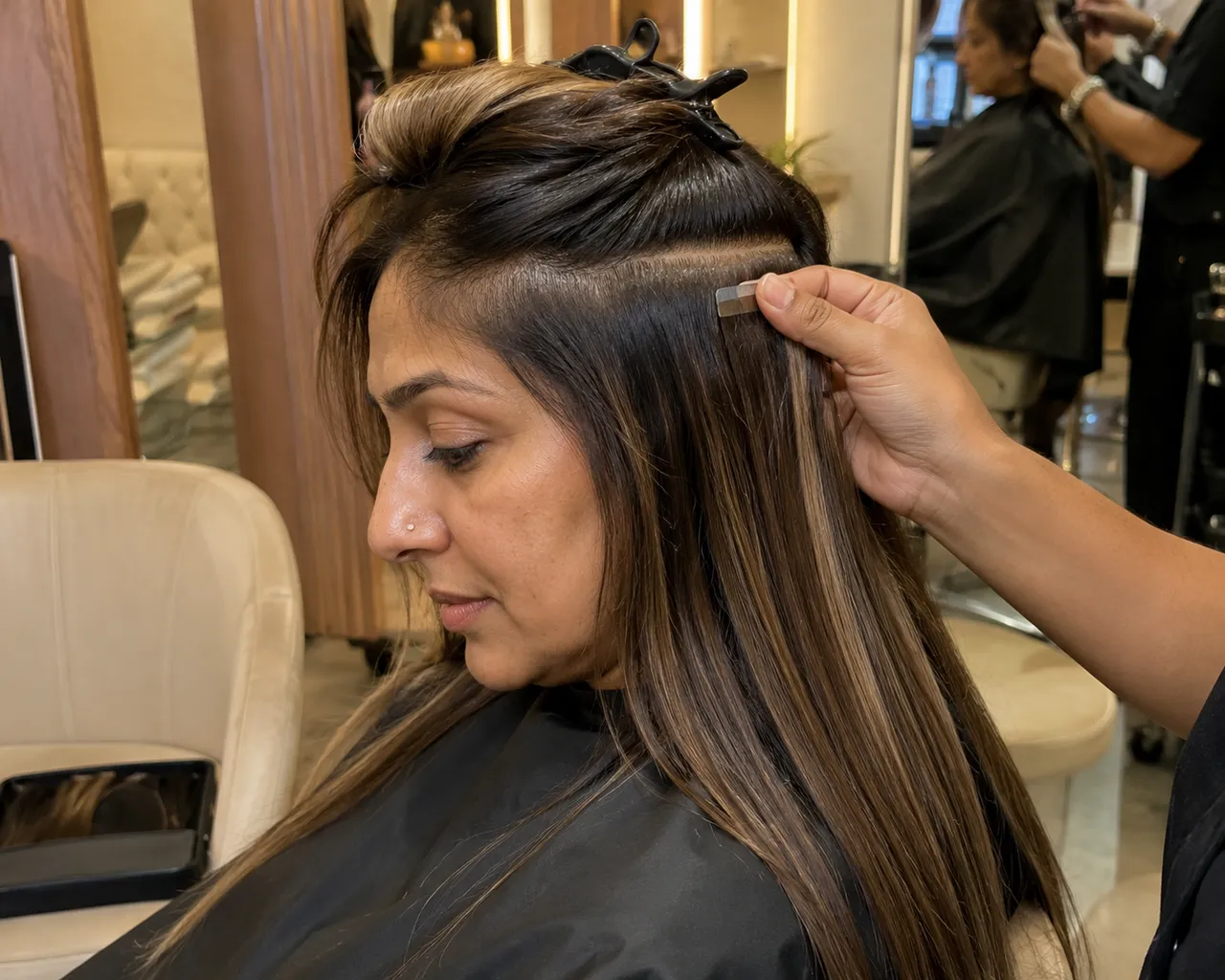
Every July, the same message arrives at our Dwarka clinic dozens of times: “Suddenly losing SO much hair, please help.” Monsoon hair-fall panic is real, annual, and mostly — not entirely — harmless. Here’s how to tell which kind you have.
Why monsoon actually triggers shedding
Humidity keeps your scalp damp. Delhi’s monsoon air sits at 70–90% humidity. Your scalp sweats more, dries slower, and a constantly damp scalp weakens the grip of hair roots — while giving fungal issues like dandruff exactly the environment they love.
Rain and hard water residue. Getting caught in rain isn’t romantic for your scalp — rainwater carries pollutants down through your hair, and the harder municipal water many Dwarka societies get leaves mineral residue that irritates.
The seasonal cycle is real. Hair biology has a mild seasonal rhythm — a larger batch of follicles enters the resting phase in late summer, and that hair sheds a couple of months later. Right on schedule: monsoon. This part happens to everyone and reverses on its own.

A 10-minute scalp check tells you whether it’s seasonal shedding or genuine thinning — the plans are completely different.
Normal vs worry: the honest line
| Sign | Verdict |
|---|---|
| More strands in the drain/comb, July–Sept | Normal seasonal shedding |
| Up to ~150–200 strands/day, temporarily | Still normal for monsoon |
| Shedding continues heavy past October | Get assessed |
| Widening partition, visible scalp, receding line | Genuine thinning — assess now |
| Itching, flaking, redness, patches | Scalp condition — treat the scalp first |
The single most useful test: is the partition getting wider? Seasonal shedding drops hair evenly and regrows; pattern thinning shows up as a slowly widening part or thinning crown. One resolves itself; the other only progresses if ignored.
What genuinely helps in monsoon
- Dry your scalp properly. After rain or a wash, get the scalp dry — not just the lengths. A cool blow-dry beats hours of damp.
- Wash more often, not less. Monsoon scalps need 3–4 gentle washes a week to stay clean and fungus-free. The “washing causes hair fall” fear keeps damp, oily scalps dirty — the hair in the drain was already shed; the wash just collects it.
- Skip heavy oiling on a flaky scalp. If you have dandruff or itching, oil feeds the problem. Treat the scalp first, romance the champi later.
- Treat dandruff seriously. Monsoon dandruff + scratching = broken hair and inflamed follicles. A medicated approach for a few weeks beats a year of home remedies.
- Eat protein. Hair is protein. Monsoon comfort-carb season quietly starves it.
When the clinic actually helps
If the assessment shows genuine thinning underneath the seasonal noise, that’s where treatment matters — because pattern thinning caught early is easy to hold, and caught late is expensive.
- Scalp assessment — 10 minutes, tells you which category you’re in. WhatsApp us a clear scalp photo (crown + hairline) for a free first read.
- PRP / GFC — your own growth factors strengthening weakened follicles. PRP from ₹10,000 for 5 sessions, GFC ₹15,000. Results are strongest when started at the “noticing it” stage, not the “hiding it” stage. Hair restoration details.
- Medicated scalp treatment for stubborn monsoon dandruff and folliculitis.
Honesty section: no clinic treatment stops seasonal shedding — it settles by itself as the weather turns. What treatment does is protect and rebuild the follicles that matter long-term. Anyone selling you an urgent package for pure monsoon shedding is monetising your panic.
Key takeaway: Monsoon shedding up to ~150–200 strands/day is normal and temporary — keep the scalp clean and dry, and it settles by October. The real question is what’s underneath it: if your partition is widening, that’s the thing to treat, and the earlier the easier.
Free first opinion, Dwarka
WhatsApp +91 74007 60054 with a scalp photo in good light — we’ll tell you honestly whether it’s seasonal or something to address, before you spend a rupee. Brightonic, Sector 8, Dwarka — near Sector 9 Metro, easy from Palam, Janakpuri and Uttam Nagar. Open 7 days, 10 AM–8 PM. Book a consultation.
Quick answers
- Why does hair fall increase during monsoon?
- Three reasons stack up — humidity makes the scalp sweat and stay damp (weakening roots and feeding fungal issues), rainwater and hard water residue irritate the scalp, and a natural seasonal shedding cycle peaks around this time. Losing noticeably more hair in July–September is common and usually temporary.
- How much hair fall is normal in monsoon?
- Normal shedding is roughly 50–100 strands a day; in monsoon it can temporarily rise to 150–200 and still be seasonal. Worry when it stays elevated past October, when you see widening partition or visible scalp, or when it comes with itching, flaking or patches — those need assessment.
- Does PRP help with monsoon hair fall?
- PRP helps the underlying follicle strength, not the season. If monsoon shedding is layered on top of ongoing thinning — a widening part, a receding line — PRP addresses the real problem while the seasonal part settles on its own. A scalp assessment tells you which kind you have.
This article is general information from the Brightonic team and is not a substitute for personal medical advice. Suitability and outcomes are assessed individually at consultation.
Considering a treatment?
Book a calm, no-pressure consultation at our Sector 8, Dwarka centre.
Book a Consultation →